

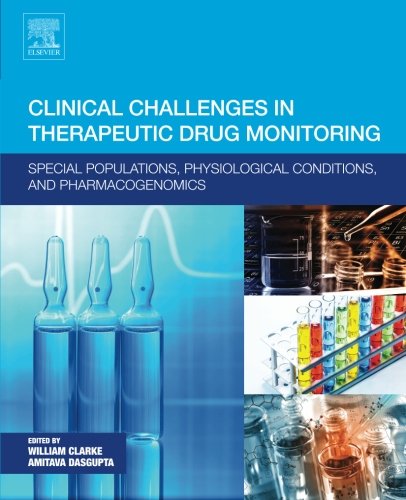
Clinical Challenges in Therapeutic Drug Monitoring Special Populations Physiological Conditions and Pharmacogenomics 1st Edition by William Clarke 0128020258 9780128020258


Original price was: $50.00.$25.00Current price is: $25.00.
Clinical Challenges in Therapeutic Drug Monitoring. Special Populations, Physiological Conditions and Pharmacogenomics 1st Edition by William Clarke – Ebook PDF Instant Download/DeliveryISBN: 0128020258, 9780128020258
Full download Clinical Challenges in Therapeutic Drug Monitoring. Special Populations, Physiological Conditions and Pharmacogenomics 1st Edition after payment.
Product details:
ISBN-10 : 0128020258
ISBN-13 : 9780128020258
Author: William Clarke
Clinical Challenges in Therapeutic Drug Monitoring: Special Populations, Physiological Conditions and Pharmacogenomics focuses on critical issues in therapeutic drug monitoring including special requirements of therapeutic drug monitoring important to special populations (infants and children, pregnant women, elderly patients, and obese patients). The book also covers issues of free drug monitoring and common interferences in using immunoassays for therapeutic drug monitoring.
This book is essential reading for any clinician, fellow, or trainee who wants to gain greater insight into the process of therapeutic drug monitoring for individual dosage adjustment and avoiding drug toxicity for certain drugs within a narrow therapeutic window. The book is written specifically for busy clinicians, fellows, and trainees who order therapeutic drug monitoring and need to get more familiar with testing methodologies, issues of interferences, and interpretation of results in certain patient populations.
Clinical Challenges in Therapeutic Drug Monitoring. Special Populations, Physiological Conditions and Pharmacogenomics 1st Table of contents:
Chapter 1. Overview of Therapeutic Drug Monitoring
Abstract
1.1 Introduction
1.2 Principles of TDM
1.3 Clinical Areas in Which TDM is Routine Practice
1.4 Conclusions
References
Chapter 2. Immunoassays and Issues With Interference in Therapeutic Drug Monitoring
Abstract
2.1 Introduction
2.2 Immunoassay Platforms Used in TDM
2.3 Interference of Bilirubin, Hemolysis, and Lipemia
2.4 Interferences in Digoxin Immunoassays
2.5 Issues of Interferences With Immunoassays for Immunosuppressants
2.6 Interferences in Immunoassays for Anticonvulsants
2.7 Interferences in Immunoassays for TCAs
2.8 Conclusions
References
Chapter 3. Application of Chromatography Combined With Mass Spectrometry in Therapeutic Drug Monitoring
Abstract
3.1 Introduction
3.2 Liquid Chromatography
3.3 Mass Spectrometry
3.4 Preanalytical Stage
3.5 Application of LC-MS/MS Methods in TDM
3.6 LC-MS/MS Limitations
3.7 Conclusions
References
Chapter 4. Monitoring Free Drug Concentration: Clinical Usefulness and Analytical Challenges
Abstract
4.1 Introduction
4.2 Drug–Protein Binding
4.3 Drugs Requiring Free Drug Monitoring
4.4 Conditions in Which Monitoring Free Anticonvulsants is Necessary
4.5 Mechanisms of Elevated Free Anticonvulsant Levels in Various Pathophysiological Conditions
4.6 Elevated Free Anticonvulsant due to Drug–Drug Interactions
4.7 Free Drug Monitoring of Drugs Bound to AGP
4.8 Monitoring Free Concentrations of Immunosuppressants
4.9 Special Situation: Monitoring Free Digoxin
4.10 Monitoring Free Concentrations of Protease Inhibitors
4.11 Saliva and Tears for Determination of Free Drug Concentration
4.12 Methods for Monitoring Free Drug Concentration
4.13 Conclusions
References
Chapter 5. Therapeutic Drug Monitoring of Newer Antiepileptic Drugs
Abstract
5.1 Introduction
5.2 Therapeutic Drug Monitoring of Antiepileptic Drugs
5.3 Newer Generation of Antiepileptic Drugs
5.4 Conclusions
References
Chapter 6. Therapeutic Drug Monitoring of Antiretrovirals
Abstract
6.1 Introduction
6.2 Rationale for Therapeutic Drug Monitoring of Antiretroviral Agents
6.3 Antiretroviral Drug Classes
6.4 Analytical Methodologies
6.5 Clinical Trials
6.6 Challenges and Limitations of Therapeutic Drug Monitoring for Antiretroviral Agents
6.7 Conclusions
References
Chapter 7. Therapeutic Drug Monitoring in Infants and Children
Abstract
7.1 Introduction
7.2 Basic Concepts of TDM as It Relates to Infants and Children
7.3 Pharmacokinetic Calculations
7.4 Sample Collection, Analysis, and Interpretation
7.5 Specific Drug Classes
7.6 Conclusions
References
Chapter 8. Therapeutic Drug Monitoring in Pregnancy
Abstract
8.1 Introduction
8.2 TDM in Pregnancy
8.3 What Drugs Warrant TDM?
8.4 Steps Involved in the TDM Process
8.5 Pregnancy-Induced Physiologic, Pharmacokinetic, and Pharmacodynamic Changes in Drug Disposition
8.6 Drugs Used in Pregnancy With Recommended TDM
8.7 Limitations of TDM in Pregnancy
8.8 Conclusions
References
Chapter 9. Therapeutic Drug Monitoring in Older People
Abstract
9.1 Introduction
9.2 Clinical Pharmacology of Medicines in Older People: Implications for TDM
9.3 Which Drugs and When Should TDM Be Used in Older People?
9.4 Studies Investigating TDM in Older People
9.5 Pharmacodynamic Monitoring to Guide Dosing in Older People
9.6 Cost-Effectiveness of TDM in Older People
9.7 Big Data and Best Evidence to Support TDM in Older People
9.8 Conclusions
Acknowledgments
References
Chapter 10. Therapeutic Drug Monitoring in Obese Patients
Abstract
10.1 Introduction
10.2 PK in Obesity
10.3 Chemotherapy in Obese Patients
10.4 Antimicrobial Treatment in Obese Patients
10.5 PK After Bariatric Surgery
10.6 Conclusions
References
Chapter 11. Special Issues in Therapeutic Drug Monitoring in Patients With Uremia, Liver Disease, and in Critically Ill Patients
Abstract
11.1 Introduction
11.2 Monitoring Free Drug Concentrations in Patients With Uremia, Liver Disease, and in Critically Ill Patients
11.3 Altered Drug Disposition in Patients With Kidney Disease
11.4 Altered Drug Disposition in Hepatic Disease
11.5 Altered Drug Disposition in Critically Ill Patients
11.6 Application of TDM in Critically Ill Patients
11.7 Conclusions
References
Chapter 12. Issues of Pharmacogenomics in Monitoring Warfarin Therapy
Abstract
12.1 Introduction
12.2 Potential for Pharmacogenomics of Warfarin
12.3 Pharmacology
12.4 Clinical Relevance
12.5 Cost-Effectiveness of Pharmacogenomics Testing in Warfarin Therapy
12.6 New Medications to Replace Warfarin
12.7 Conclusions
References
Chapter 13. Alternative Sampling Strategies for Therapeutic Drug Monitoring
Abstract
13.1 Introduction
13.2 The Ideal Alternative Matrix for Therapeutic Drug Monitoring
13.3 The Correlation Between Alternative Matrix and Systemic Levels
13.4 Alternative Specimen: Dried Blood Spots
13.5 Alternatives to Classical Dried Blood Spots
13.6 Paper Spray Ionization for the Analysis of Dried Blood Spots
13.7 Alternative Specimen: Oral Fluid
13.8 Alternative Specimen: Tears
13.9 Alternative Specimen: Interstitial Fluid
13.10 Alternative Specimen: Hair
13.11 Alternative Specimen: Exhaled Breath
13.12 Alternative Specimen: Sweat
13.13 Alternative Specimen: Nasal Mucus
13.14 Toward Routine Implementation
13.15 Conclusions
Acknowledgment
References
Chapter 14. Integrating Therapeutic Drug Monitoring in the Health Care Environment: Therapeutic Drug Monitoring and Pharmacists
Abstract
14.1 Introduction
14.2 Team-Based Care in the Modern Health Care Environment
14.3 Hypertension
14.4 Diabetes and Hypertension
14.5 Cardiovascular Diseases
14.6 Pharmacists and Cost-Effective Care
14.7 Impact of Health Care Information Technology on TDM
14.8 Practical Examples of Integrating Pharmacy for TDM and Patient Care
14.9 Epilepsy
14.10 Conclusions
People also search for Clinical Challenges in Therapeutic Drug Monitoring. Special Populations, Physiological Conditions and Pharmacogenomics 1st:
clinical significance of therapeutic drug monitoring
types of monitoring in clinical trials
what is therapeutic drug level monitoring
clinical trial challenges
challenges of therapeutic drug monitoring
Tags: Clinical Challenges, Therapeutic, Drug Monitoring, Special Populations, Physiological Conditions, Pharmacogenomics, William Clarke
You may also like…

Politics & Philosophy

Uncategorized
Chemistry - Biochemistry

Medicine - Natural Medicine
Herbal Bioactive-Based Drug Delivery Systems: Challenges and Opportunities 1st Edition


Biology and other natural sciences - Plants: Agriculture and Forestry

Politics & Philosophy - Social Sciences