


Galaxies 1st edition by Francoise Combes – Ebook PDF Instant Download/DeliveryISBN: 1119817987, 9781119817987
Full download Galaxies 1st edition after payment.
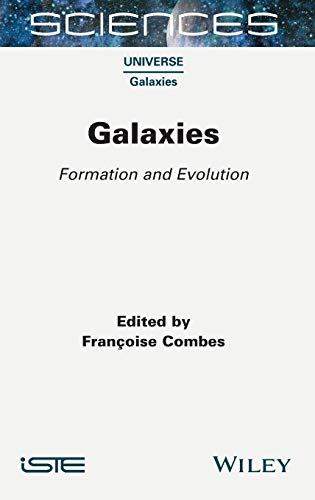
Product details:
ISBN-10 : 1119817987
ISBN-13 : 9781119817987
Author : Francoise Combes
Galaxies are vast ensembles of stars, gas and dust, embedded in dark matter halos. They are the basic building blocks of the Universe, gathered in groups, clusters and super-clusters. They exist in many forms, either as spheroids or disks. Classifications, such as the Hubble sequence (based on mass concentration and gas fraction) and the colormagnitude diagram (which separates a blue cloud from a red sequence) help to understand their formation and evolution. Galaxies spend a large part of their lives in the blue cloud, forming stars as spiral or dwarf galaxies. Then, via a mechanism that is still unclear, they stop forming stars and quietly end in the red sequence, as spheroids. This transformation may be due to galaxy interactions, or because of the feedback of active nuclei, through the energy released by their central super-massive black holes. These mechanisms could explain the history of cosmic star formation, the rate of which was far greater in the first half of the Universe?s life.
Galaxies delves into all of these surrounding subjects in six chapters written by dedicated, specialist astronomers and researchers in the field, from their numerical simulations to their evolutions.
Galaxies 1st Table of contents:
1 The Classification of Galaxies
1.1. Introduction
1.2. Classes of galaxies
1.3. Elliptical galaxies
1.4. Spiral galaxies
1.5. S0 galaxies
1.6. Magellanic spiral and irregular galaxies
1.7. Dwarf elliptical, S0, and spheroidal galaxies
1.8. Edge-on galaxies
1.9. Morphology of interacting and merging galaxies
1.10. General properties along the CVRHS sequence
1.11. Other approaches to galaxy classification
1.12. Interpretations of morphology
1.13. Artificial galaxies and the future of galaxy classification
1.14. References
2 Our Galaxy, the Milky Way
2.1. Introduction
2.2. Baryonic discs and their spiral structure
2.3. The central kiloparsecs: the bar and the bulge
2.4. The stellar halo
2.5. On the dark matter content and shape, as inferred from rotation curves and stellar streams
2.6. Dissecting the global structure: stellar kinematics, abundances and ages
2.7. Reconstructing the Milky Way evolution
2.8. Perspectives
2.9. References
3 Early-type Galaxies
3.1. Introduction
3.2. General properties: components and morphology
3.3. Zoom on the stellar component
3.4. Dynamics of ETGs
3.5. Formation and evolution processes
3.6. Conclusion
3.7. References
4 Spiral Galaxies
4.1. Introduction
4.2. Blue and red galaxies: quenching star formation
4.3. Spiral galaxies: density waves or not?
4.4. Bars: drivers of evolution
4.5. Environment of spiral galaxies
4.6. Conclusion
4.7. References
5 Galaxy Mergers and Interactions through Cosmic Time
5.1. Introduction
5.2. The physics of merging
5.3. The merger history of galaxies
5.4. The added value of mergers
5.5. Summary
5.6. Acknowledgments
5.7. References
6 Cosmic Evolution of Galaxies
6.1. Introduction
6.2. Characteristics of galaxies used to define their cosmic evolution
6.3. Starbursts, secular evolution and universality of star formation
6.4. Detection of distant galaxies
6.5. Cosmic history of galaxies
6.6. Origin of the cosmic history of galaxies
6.7. Conclusion
6.8. References
People also search for Galaxies 1st:
galaxies
how many galaxies are there
star wars galaxies
types of galaxies
twin galaxies
Tags: Galaxies, Francoise Combes, tars, gas, dust, matter halos
You may also like…
Uncategorized
(eTextbook PDF) for 21st Century Astronomy: Stars and Galaxies (Sixth Edition) 6th Edition

Medicine
Escourolle and Poirier’s Manual of Basic Neuropathology 6th Edition Francoise Gray Md (Editor)
Astronomy - Stars - Astronomical Studies & Observations

Animals & Pets - Animals