
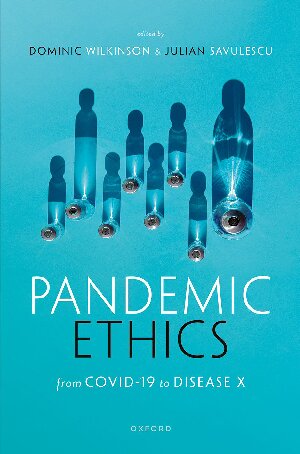
Pandemic Ethics From COVID 19 to Disease X 1st edition by Julian Savulescu, Dominic Wilkinson 0192699619 9780192699619
Original price was: $50.00.$25.00Current price is: $25.00.
Pandemic Ethics: From COVID-19 to Disease X 1st edition by Julian Savulescu, Dominic Wilkinson – Ebook PDF Instant Download/DeliveryISBN: 0192699619, 9780192699619
Full download Pandemic Ethics: From COVID-19 to Disease X 1st edition after payment.
Product details:
ISBN-10 : 0192699619
ISBN-13 : 9780192699619
Author : Julian Savulescu, Dominic Wilkinson
The COVID-19 pandemic is a defining event of the 21st century. It has taken over eighteen million lives, closed national borders, put whole populations into quarantine and devastated economies. Yet while COVID-19 is catastrophic, it is not unique. Children who have been home-schooled during COVID-19 will almost certainly face another pandemic in their lifetime – one at least as bad-and potentially much worse-than this one. The WHO has referred to such a future (currently unknown) pathogen as “Disease X”. The defining feature of a pandemic is its scale-the simultaneous threat to millions or even billions of lives. That scale leads to unavoidable ethical dilemmas since the lives and livelihood of all cannot be protected. But since one of the most powerful ways of arresting the spread of a pandemic is to reduce contact between people, pandemic ethics also challenges some of our most widely accepted ethical beliefs about individual liberty and autonomy. Finally, pandemic ethics brings vividly to the foreground debates about the structure of society, inequalities, disadvantage and our global responsibilities. In this timely and vital collection, Dominic Wilkinson and Julian Savulescu bring together a global team of leading philosophers, lawyers, economists, and bioethicists. The book reviews the COVID-19 pandemic to ask not only ‘did our societies make the right ethical choices?’, but also ‘what lessons must we learn before Disease X arrives?’
Pandemic Ethics: From COVID-19 to Disease X 1st Table of contents:
I.2 Freedom
I.3 Equality
I.4 Pandemic X
Part I. Global Response to the Pandemic
1. The Great Coronavirus Pandemic: An Unparalleled Collapse in Global Solidarity
1.1 Norms of Solidarity
1.2 The International Health Regulations: Fracturing of the Global Instrument to Govern Pandemic Response
1.3 SARS-CoV-2 Proximal Origin
1.4 Failures in Risk Communication and Lost Public Trust in WHO and Public Health Agencies
1.5 Failures in Scientific Cooperation
1.6 Nationalism, Isolationism, and Science Denial
1.7 WHO Caught in the Middle of Two Political Superpowers
1.8 Exacerbating the Global Narrative of Deep Inequities
1.9 A Failure of Imagination of Global Bodies
1.10 How to Solidify Global Cooperation and Equity
2. Institutionalizing the Duty to Rescue in a Global Health Emergency
2.1 Extreme Nationalism
2.2 The Moral Necessity of Institutionalizing Duties of Justice, not Just Duties of Beneficence
2.3 A Dynamic Conception of Morality
2.4 Extreme Cosmopolitanism
2.5 A Positive Cosmopolitan Duty
2.6 Institutional Design
3. The Uneasy Relationship between Human Rights and Public Health: Lessons from COVID-19
3.1 Introduction
3.2 Scope
3.3 Content
3.4 Common Goods
3.5 Democracy
3.6 Conclusion
Acknowledgements
Part II. Liberty
4. Bringing Nuance to Autonomy-Based Considerations in Vaccine Mandate Debates
4.1 The Standard Approach: Appeal to the Harm Principle
4.2 Application of the Harm Principle to Vaccine Mandate Debates
4.3 Mandates and Freedom of Occupation
4.4 Just a Prick? Bodily Autonomy, Trust, and Psychosocial Harm
4.5 Reasons for Refusal and Implications for Autonomy
4.6 A Word about the Least Restrictive Alternative—Mandates vs. Nudges and Incentives
4.7 Conclusion
5. The Risks of Prohibition during Pandemics
5.1 Policing Pandemic Risks
5.2 Prohibition and Public Health Outcomes
5.3 Public Health Hypocrisy
5.4 General Principles for Prohibition and Pandemics
5.5 Conclusion
6. Handling Future Pandemics: Harming, Not Aiding, and Liberty
6.1 Introduction
6.2 Distinguishing Not Harming from Aiding
6.3 How to Weigh Costs to Some against “Benefits” to Others
7. Against Procrustean Public Health: Two Vignettes
7.1 Introduction
7.2 The Ethics of Considering Vaccination Status to Design Public Health Restrictions
7.3 The Ethics of Using “Second-Best” Vaccines
7.4 Coda: Why Research Remains Imperative
7.5 Conclusion
8. Ethics of Selective Restriction of Liberty in a Pandemic
8.1 Introduction
8.2 The Harm Principle and Liberty Restriction
8.3 Easy Rescue Consequentialism
8.4 Applying Easy Rescue Consequentialism to the Pandemic
8.5 Population-Level Consequentialist Assessment
8.6 Individual Costs
8.7 Resource Use and Indirect Harm
8.8 Consistency: Compare with Children
8.9 Objections
8.10 An Algorithm for Decision-Making
8.11 Conclusion
Part III. Balancing Ethical Values
9. How to Balance Lives and Livelihoods in a Pandemic
9.1 Introduction
9.2 Benefit–Cost Analysis
9.3 Social Welfare Analysis
9.4 Evaluating Policies: a Numerical Illustration
9.5 Conclusion
10. Pluralism and Allocation of Limited Resources: Vaccines and Ventilators
10.1 Conflicting Values, Conflicting Choices
10.2 Pluralism in Pandemics
10.3 Challenges to Developing Pluralistic Resource Allocation in a Pandemic
10.4 Disease X
10.5 Conclusions
11. Fairly and Pragmatically Prioritizing Global Allocation of Scarce Vaccines during a Pandemic
11.1 Background
11.2 Pragmatic Challenges
11.3 Flattening the Curve
11.4 Conclusion
Acknowledgments
12. Tragic Choices during the COVID-19 Pandemic: The Past and the Future
12.1 The Two Main Approaches for Resource Allocation: Ethical (USA) versus Medical (Europe) Framework
12.2 Outcomes
12.3 Lessons for the Future
12.4 Conclusion
Part IV. Pandemic Equality and Inequality
13. Ethical Hotspots in Infectious Disease Surveillance for Global Health Security: Social Justice and Pandemic Preparedness
13.1 Requirements for Effective Pandemic Preparedness
13.2 Global Justice and Infectious Disease Surveillance
13.3 Surveillance and Social Justice
13.4 Three Tests of Ethical Commitment
13.5 Conclusion: Infectious Disease Hotspots Are also Ethical Hotspots
Acknowledgements
14. COVID-19: An Unequal and Disequalizing Pandemic
14.1 Introduction
14.2 COVID-19: An ‘Unequal’ Disease?
14.3 The Pandemic and the Policy Response to it
14.4 Policy and the Pandemic: Some Fallouts
14.5 Concluding Observations
15. Pandemic and Structural Comorbidity: Lasting Social Injustices in Brazil
15.1 Introduction
15.2 COVID-19 in Brazil: Background and Pandemic
15.3 Making Visible the Intersection of Vulnerabilities: the Effects of COVID-19 in Brazil and its Colonial Entanglements
15.4 Poverty as a Risk Factor: the Case of the Pandemic in Slums
15.5 Racism and Sexism Aggravating Pandemic Risk: Unemployment, Hunger, and Domestic Violence
15.6 LGBTI+ People in the Pandemic: Isolation and Insecurity
15.7 Indigenous Peoples: Socio-environmental and Ethnic-racial Risk in the Pandemic
15.8 At-risk Groups: Colonial Vulnerability in Times of Pandemic
15.9 Adopting a Decolonial Moral Paradigm
15.10 The Colonial Past and the Post-pandemic Future
16. Fair Distribution of Burdens and Vulnerable Groups with Physical Distancing during a Pandemic
16.1 Introduction
16.2 Overview of COVID-19 Control Policies in Japan
16.3 COVID-19: Older Individuals and Foreigners in Japan
16.4 Three Policy Measures to Improve the Welfare of Vulnerable Populations
16.5 Adjusting the Public Health Policy for a Future Disease X
16.6 Conclusions
Part V. Pandemic X
17. Pondering the Next Pandemic: Liberty, Justice, and Democracy in the COVID-19 Pandemic
17.1 Liberty-Restricting Measures
17.2 Global Justice
17.3 Going Forward
17.4 Conclusion
People also search for Pandemic Ethics: From COVID-19 to Disease X 1st:
uk pandemic ethics accelerator
pandemic ethics dashboard
pandemic ethics meaning
pandemic ethics definition
cinema ethics in the post pandemic world
Tags: Pandemic Ethics, COVID 19, Julian Savulescu, Dominic Wilkinson
You may also like…
Technique - Patent Business. Ingenuity. Innovation
Medicine - Clinical Medicine
Medicine - Infectious diseases
Education Studies & Teaching - Teaching & Teacher Training
Pandemic Pedagogy: Teaching International Relations Amid COVID-19


Business & Economics
Social Science
History - World History